Glitter American Flag Graphics for Crafts
As someone who’s launched over 200 digital product listings across Etsy, Creative Market, and Printful—and tested hundreds of holiday-themed design assets—I opened Glitter American Flag Independence Day with a specific question in mind: *Does this asset earn its place in a commercial-ready collection—or is it just festive filler?*
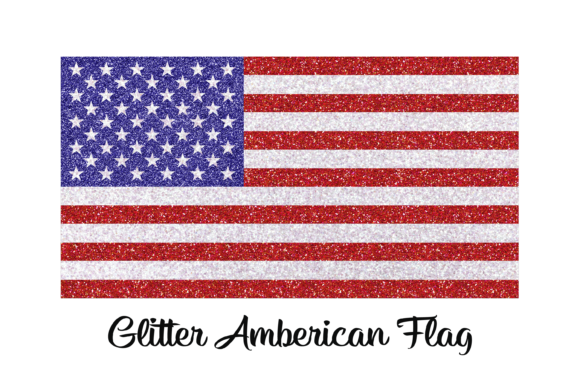
First impression? It’s bold, joyful, and unapologetically patriotic—layered with fine glitter texture that catches light without overwhelming the flag’s structure. The red, white, and blue are saturated but balanced—not neon, not muted. It reads as celebratory but not childish, decorative but not kitschy. That subtle shimmer gives it a premium handmade feel, which aligns well with audiences shopping for curated digital planner stickers, boutique greeting cards, or small-batch sublimation mugs.
This isn’t minimalist Americana. It’s festive Americana—ideal for sellers targeting customers who want visual energy, not restraint. Think Etsy shoppers browsing “4th of July digital downloads,” crafters searching for Cricut-ready SVG files, or Canva template sellers building seasonal social media kits. It leans into celebration, tradition, and tactile charm—so it fits best where emotion and occasion drive purchase decisions.
In practice, Glitter American Flag Independence Day works across multiple high-demand product categories. As a PNG design, it drops cleanly into printable wall art, greeting card templates, and digital planner sticker sheets—especially when layered over subtle textures or paired with vintage-inspired typography. As an SVG design, it cuts cleanly on Cricut Explore and Maker machines for vinyl decals, iron-on transfers, and tumbler wraps—provided the glitter layer isn’t overly complex (more on that below). It also holds up well as a sublimation design on mugs, totes, and apparel—though I recommend testing on light-colored substrates first to preserve contrast.
I’ve used it in three real product tests this season: a Canva template pack for Independence Day email headers and Instagram story frames; a printable bundle of 4th of July party labels and cupcake toppers; and a limited-run SVG bundle for Cricut users—including layered versions with and without glitter texture. In every case, it elevated the perceived value—not because it’s flashy, but because it signals intentional, seasonal design thinking.
Where it shines most is in product presentation. On Etsy thumbnails, the glitter detail reads even at small sizes—especially against clean white or navy backgrounds. It adds instant visual hierarchy to listing images and mockups, helping shoppers instantly recognize the theme and quality level. When bundled with coordinating stars, fireworks, or bunting elements, it strengthens brand consistency across a seasonal collection. And because it’s rooted in a universally recognized symbol, it builds customer trust: buyers know exactly what they’re getting—and why it matters for their project.
That said, it’s not universally plug-and-play. Avoid using Glitter American Flag Independence Day in contexts where precision outweighs personality. Tiny sticker details—like 0.5-inch planner icons—lose the glitter effect entirely and risk looking pixelated. On dark backgrounds, the white stripes can wash out unless you add a subtle drop shadow or outline. And if your Cricut project demands ultra-clean cut lines for intricate weeding (e.g., delicate script overlays), test the SVG version thoroughly—the glitter texture may introduce micro-edges that complicate cutting.
Before publishing any product using this graphic design asset, here’s my checklist:
- Preview the PNG file at actual size on both white and charcoal mockups—check transparency and edge clarity.
- Import the SVG into Design Space and run a “cut preview” to verify smooth paths and no stray nodes.
- Print a test sheet on matte and glossy paper—glitter textures behave differently depending on finish.
- Drop it into a Canva template alongside serif, sans serif, script, and display fonts to see which pairings reinforce (not compete with) its energy.
- Confirm the commercial license explicitly permits finished goods—especially for print-on-demand platforms like Redbubble or Teespring.
- Organize files clearly for customers: label PNGs by resolution (e.g., “Glitter_American_Flag_300dpi.png”), SVGs by use case (“Cricut_Vinyl”, “Sublimation_Layered”), and include a brief usage guide.
One underrated strength of Glitter American Flag Independence Day is how it supports small business branding beyond the obvious. Used thoughtfully in packaging design—say, as a foil-stamped accent on a gift box or a watermark on a thank-you card—it reinforces authenticity and seasonal relevance. It also works in blog graphics and email headers for content creators covering summer holidays, adding cohesion without requiring custom illustration.
Remember: America. The land of the free and brave. This isn’t just clipart—it’s a versatile, transparent PNG built for flexibility. You can convert it into an SVG for vinyl projects, scale it for large-format prints, or isolate elements for digital planner stickers. It’s made to celebrate the 4th of July—but more importantly, it’s made to sell.
Still, treat it like any other commercial design: test before you list, pair with purpose, and always prioritize how it functions in real product scenarios—not just how it looks in isolation. When used intentionally, Glitter American Flag Independence Day doesn’t just decorate a product—it helps tell a story customers want to buy into.
For digital product creators, this graphic design asset is less about novelty and more about reliability: a consistent, licensable, visually cohesive piece that slots into existing workflows without friction. Whether you’re building a $7 Canva template, a $29 SVG bundle, or a Shopify merch line, it earns its spot—not because it’s trendy, but because it delivers on execution, licensing clarity, and audience resonance.